
Why one color can belong to four seasons
Seasonal color analysis is not built around basic color names. It is built around how a shade behaves next to your face. A blue can be warm aqua, soft powder blue, muted teal, or sharp cobalt.
That is why advice like "Summers wear blue" is too broad. Spring, Summer, Autumn, and Winter can all wear blue, but each season needs a different temperature, depth, and intensity.
The three checks that matter
Undertone
Warm seasons need yellow-based or golden versions. Cool seasons need blue-based or rosy versions.
Value
Light seasons need tints. Deep seasons need richer shades that can hold contrast.
Chroma
Bright seasons need cleaner color. Soft seasons need color mixed with gray, brown, or gentle mutedness.
Contrast
Winter and Bright Spring can carry sharper contrast. Summer, Soft Autumn, and Light seasons usually need a gentler effect.
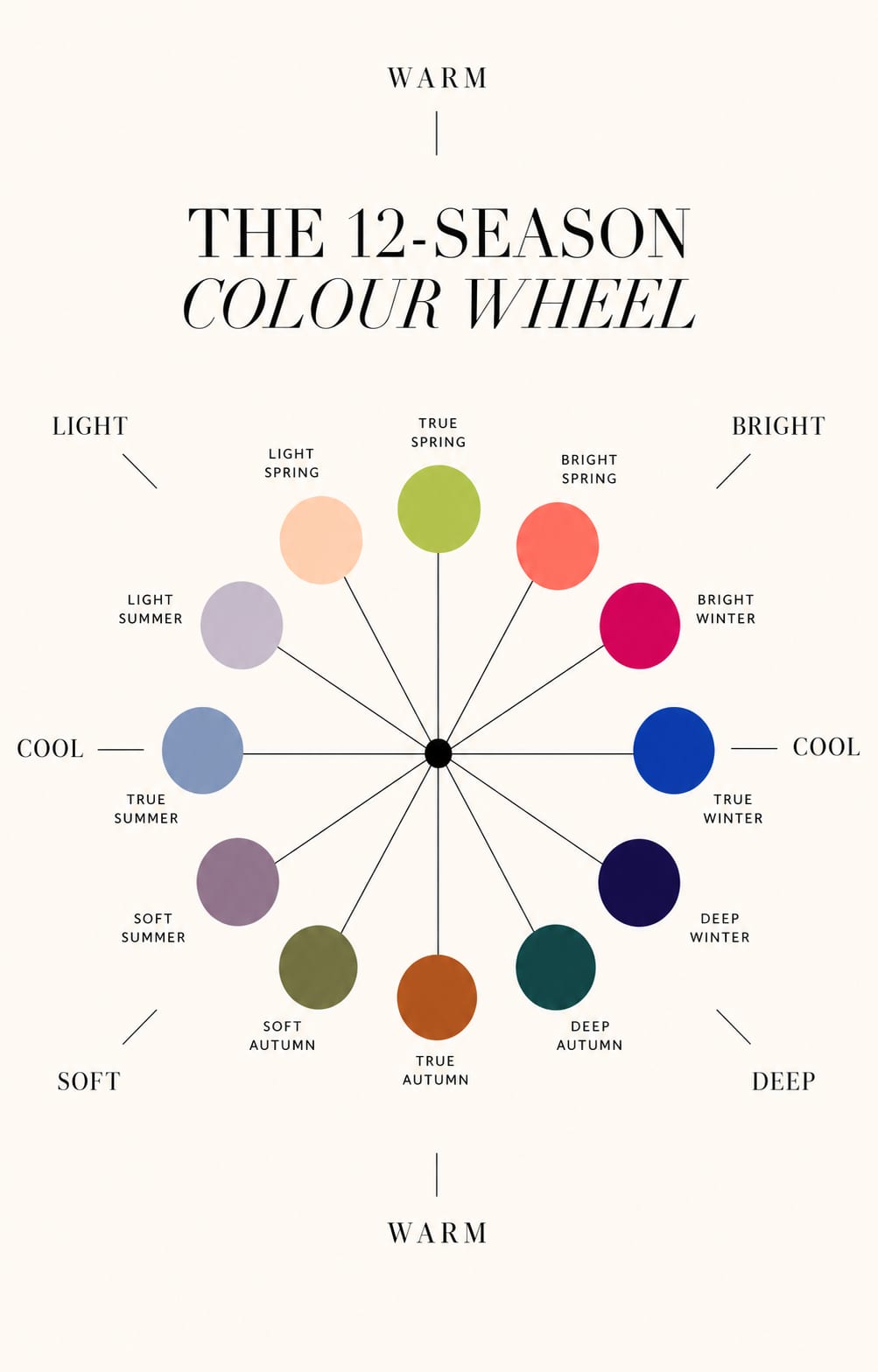
One color family, four seasonal versions
The table below is a fast reference for the main seasonal families. Use it as a shopping filter, then compare the exact garment against your palette.
| Color family | Spring | Summer | Autumn | Winter |
|---|---|---|---|---|
| Blue | aqua, clear turquoise, bright warm blue | powder blue, periwinkle, slate blue | teal, petrol blue, muted blue-green | cobalt, royal blue, icy blue |
| Red | poppy, tomato red, warm coral-red | rose red, raspberry, soft cranberry | brick, rust, terracotta red | true red, blue-red, burgundy |
| Green | grass green, apple, clear mint | sage, seafoam, blue-green | olive, moss, forest green | emerald, pine, icy mint |
| Pink | peach pink, coral pink, watermelon | rose, mauve pink, dusty pink | salmon, warm rosewood, clay pink | fuchsia, hot pink, icy pink |
Color-by-color guides
Use the full guides when you need swatches, shopping terms, and 12-season subtypes for one color family.
Best blue for each season
Compare Spring aqua, Summer powder blue, Autumn teal, and Winter cobalt.
Best red for each season
Compare Spring poppy, Summer rose red, Autumn brick, and Winter true red.
Best green for each season
Compare Spring grass green, Summer sage, Autumn olive, and Winter emerald.
Best pink for each season
Compare Spring coral pink, Summer rose, Autumn salmon, and Winter fuchsia.
Best neutrals for each season
Compare ivory, taupe, camel, navy, gray, brown, black, and white by season.
Best white for each season
Compare Spring ivory, Summer soft white, Autumn cream, and Winter optic white.
Can every season wear black?
See when black works, when it looks harsh, and what to wear instead.
How each season changes a color
Spring makes color warmer and clearer
Spring versions look fresh, yellow-based, and energetic. Coral beats dusty rose. Aqua beats slate. Grass green beats olive.
Summer makes color cooler and softer
Summer versions look blue-based and slightly misted. Powder blue, mauve pink, soft raspberry, and sage usually work better than heat, darkness, or neon brightness.
Autumn makes color warmer and earthier
Autumn versions look golden, browned, mossy, or spicy. Rust, olive, teal, mustard, and terracotta sit more naturally than icy pastels or clean jewel tones.
Winter makes color cooler and sharper
Winter versions look blue-based, crisp, icy, or deep. Cobalt, emerald, true red, fuchsia, black, and pure white work because they match Winter's clarity and contrast.
How to use this when shopping
Start with the color family, then check the shade. If you are shopping for a blue shirt, do not stop at "blue." Ask whether the blue is powdery, teal, aqua, cobalt, navy, icy, or dusty.
The same rule works for makeup. A red lipstick can lean tomato, brick, berry, cranberry, rose, or burgundy. The best match is usually obvious when you compare two close shades side by side.
If you do not know your season yet, start with the seasonal color analysis guide, then use the 12-season chart and the neutral guide for more specific palette examples.