
What is True (Cool) Summer?
True (Cool) Summer: Cool Summer is the cool, softened Summer season in the 12-season color analysis system. In many 12-season systems, this season is also called True Summer. Some expanded systems split the names differently, so check the system before treating them as exact synonyms.
Seasonal color analysis uses color dimensions such as hue, value, and chroma. Those dimensions are part of formal color notation systems such as Munsell, then translated by analysts into the practical language of warm vs cool, light vs deep, and soft vs bright. If those terms are new, the color theory basics guide covers hue, value, and chroma before you read the rest of this page.
The label is useful only if it changes real choices. A good True (Cool) Summer result should make shirts, makeup, hair color, jewelry, and neutrals easier to repeat.
True (Cool) Summer color dimensions
Cool Summer is cool first and soft second. The palette fails when color turns warm, golden, orange, or very bright. It also fails when contrast becomes too stark.
- Dark Light Value
- Soft Bright Chroma
- Cool Warm Temperature
| Dimension | True (Cool) Summer | What to test |
|---|---|---|
| Temperature | Cool. Cool Summer is the pure cool Summer category, with blue-based colors and no obvious warmth. | Compare warm and cool versions of the same color near the face. |
| Value | Light-medium to medium-deep. The palette sits mostly in soft middle values. | Compare light, medium, and deep drapes without changing temperature. |
| Chroma | Soft to medium-soft. Colors are muted, but not as gray as Soft Summer. | Compare muted and clear versions of a similar hue. |
| Contrast | Low to medium contrast. Cool Summer usually looks best in tonal combinations rather than stark contrast. | Watch whether the face improves with tonal styling or stronger contrast. |
True (Cool) Summer compared with neighboring seasons
| Test | True (Cool) Summer | Neighboring seasons |
|---|---|---|
| Temperature | Fully cool | Soft Summer is slightly warmer. True Winter is sharper |
| Value | Medium and gentle | Light Summer is lighter. Deep Winter is darker |
| Chroma | Soft to medium-soft | Soft Summer is grayer. True Winter is clearer |
| Best test color | Dusty rose, slate, raspberry | Orange usually fails. Black can be harsh |
A neighboring result is also common when two analysts use different systems. See 12-season vs. 16-season color analysis if your result changed between a 12-season and 16-season sitting.
True (Cool) Summer contrast and outfit balance
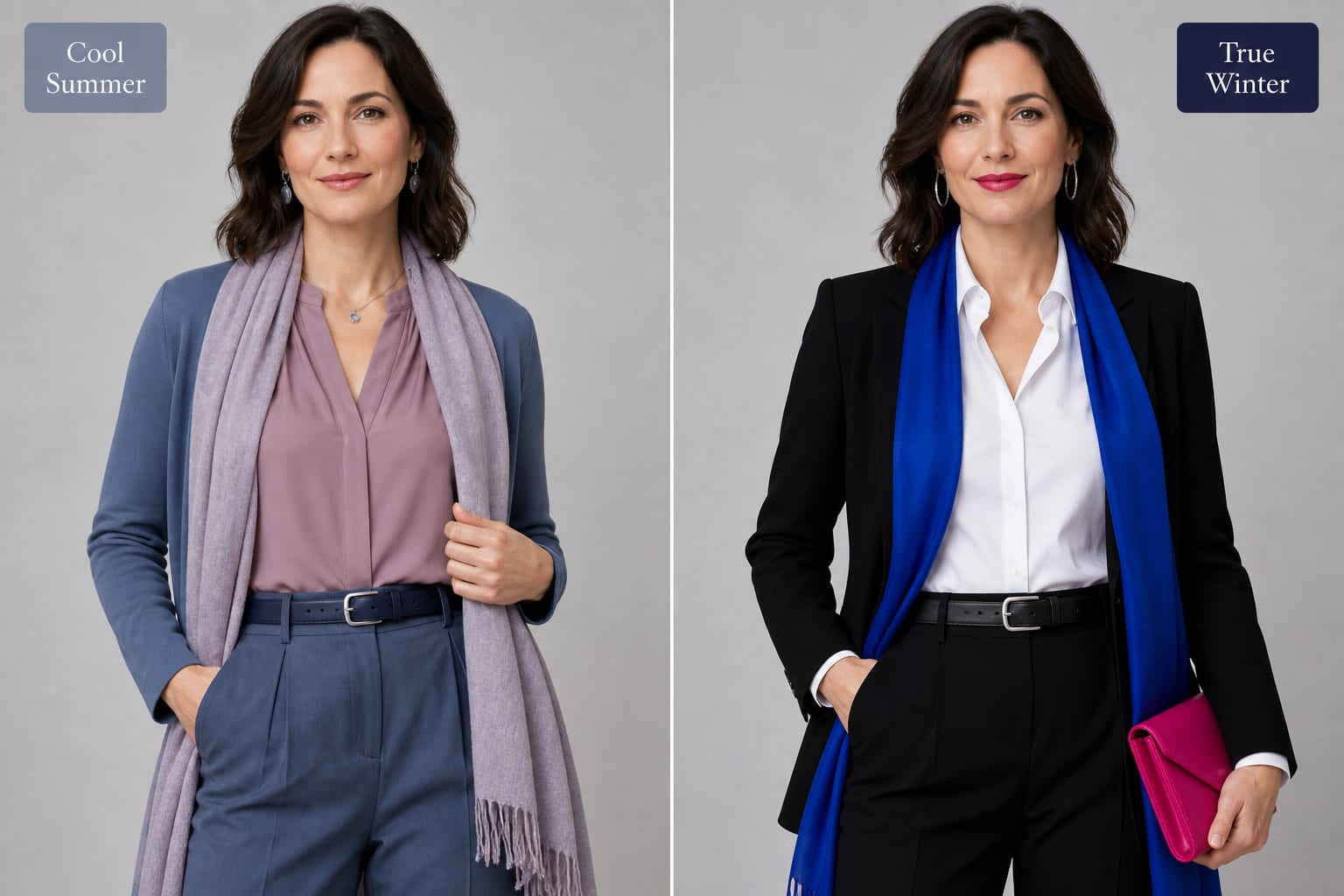
Cool Summer usually carries low to medium contrast. Tonal outfits keep the face present, while stark black-and-white blocks can look harder than the natural colouring.
- Pair close values such as dusty rose with mauve, slate blue with pewter, or soft teal with soft navy.
- Use raspberry or soft plum as a controlled accent instead of stacking several high-contrast colours.
- Let texture and a gentle print create interest when a high-contrast outfit feels louder than the face.
How to tell if you are True (Cool) Summer
You identify True (Cool) Summer by drape response, not by one feature. Skin, hair, and eyes matter, but the deciding evidence is how controlled colors change the face.
Skin undertone signals
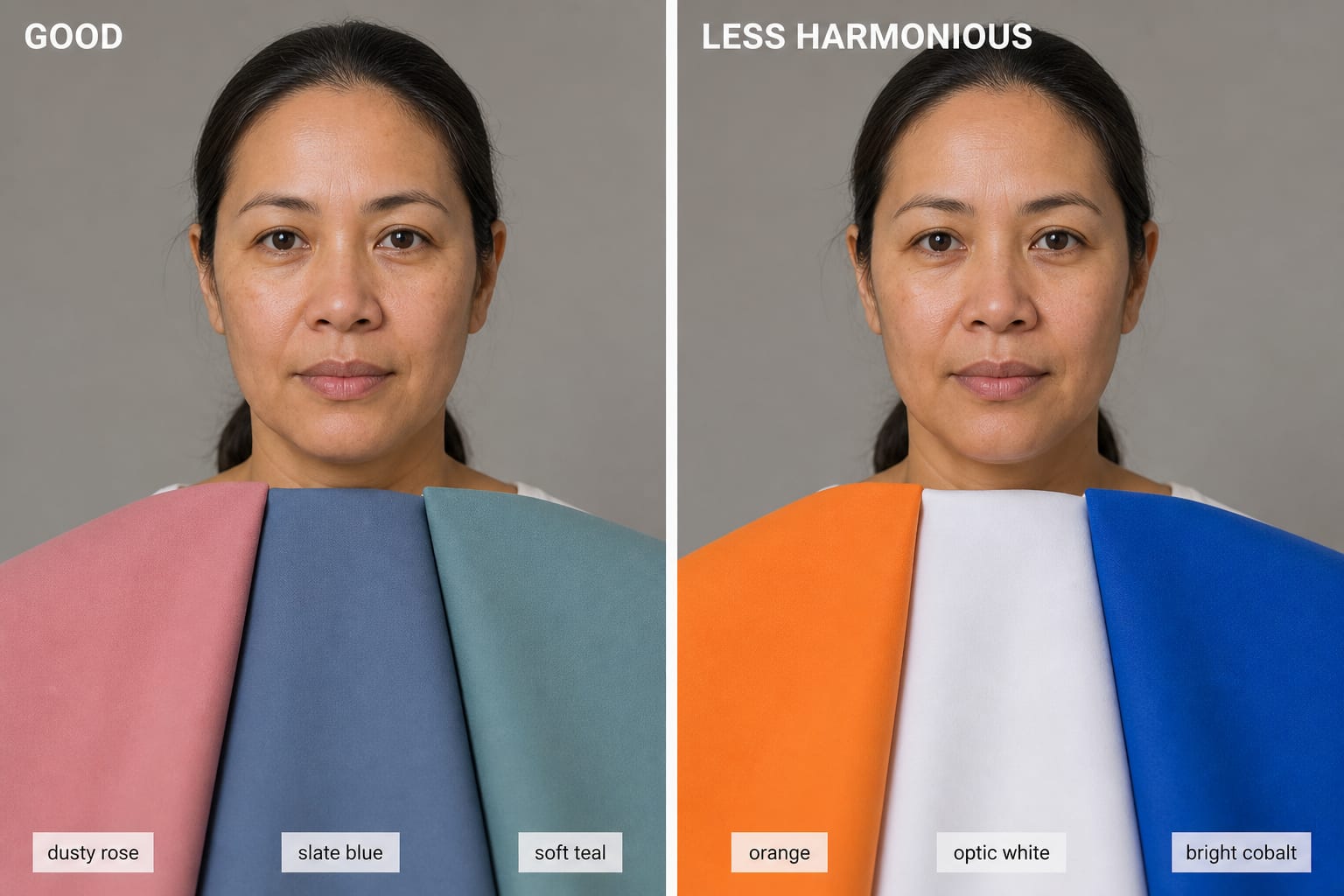
Cool Summer skin often reads cool pink, cool beige, neutral-cool, rose, or olive-cool. The better test is whether dusty rose, slate blue, cool raspberry, and soft teal smooth the face.
Surface redness, tanning, foundation, and phone white balance can distort undertone. Test on clean skin in indirect daylight, with dyed hair pulled away if the color changes your natural contrast.
Hair color signals
Hair often reads ash blonde, dark blonde, ash brown, medium brown, cool brown, or gray. Warm highlights can pull attention away from the face.
Natural hair is more useful than a current dye job. If your hair is colored, focus on whether the right palette makes the skin clearer before judging whether the hair matches.
Eye color signals
Eye colors can include blue, gray-blue, gray, green-gray, cool hazel, or soft brown. The eyes often look more defined in blue-based muted colors.
Eye color is supporting evidence. The same blue, brown, green, or hazel eye can appear in several seasons, so use the eye response to confirm the drape result rather than choose the result.
Common confusion seasons
Cool Summer is confused with True Winter, Light Summer, and Soft Summer. Test coolness first, then how much contrast the face can carry.
- True (Cool) Summer vs True Winter: True Winter is cooler with stronger contrast and clarity. Cool Summer needs blue-based color with softness.
Controlled test: Compare dusty rose with black, then slate blue with cobalt. Cool Summer usually looks calmer in the softened pair, while True Winter needs the cleaner contrast. - True (Cool) Summer vs Light Summer: Light Summer is lighter and more pastel. Cool Summer needs more coolness, more slate, and slightly more grounded middle values.
Controlled test: Compare powder pink with dusty rose. Light Summer usually benefits from the lighter colour, while Cool Summer needs the more grounded middle value. - True (Cool) Summer vs Soft Summer: Soft Summer is softer and more neutral. Cool Summer is cleaner, cooler, and usually handles raspberry and slate better.
Controlled test: Compare blue-gray with slate blue, then mauve with raspberry. Soft Summer usually settles into the grayer option, while Cool Summer needs more clear coolness.
The True (Cool) Summer color palette with hex codes
The True (Cool) Summer palette works when every color respects the same temperature, value, and chroma pattern. Hex codes are digital approximations. Use them for shopping, mood boards, and comparison, not as a replacement for fabric draping.
Cool White
#F4F5F5
A soft white that is cleaner than cream and gentler than optic white.
Dusty Rose
#C9869A
A core pink for tops, blush, and lipstick because it is cool and softened.
Mauve
#B57B9A
A muted purple-pink that repeats the season coolness.
Raspberry
#B2456E
A stronger color that stays blue-based without turning Winter-bright.
Lavender Gray
#A99AC4
A soft purple neutral for knits, scarves, and eyeshadow direction.
Slate Blue
#667FA3
A better blue than turquoise, navy-black, or warm denim.
Soft Teal
#6F9A9A
A muted blue-green that works when green needs to stay cool.
Spruce
#3F6B5E
A deeper muted cool green for coats, knits, and accessories.
Pewter
#8B8F96
A practical gray that works for metals, bags, and tailoring.
Soft Navy
#46566F
A blue neutral that is easier than black or inky navy.
Cool Taupe
#8A817F
A quiet neutral for trousers, knits, and shoes.
Soft Charcoal
#555B63
A gentle dark neutral for people who need more depth than pewter.
Soft Plum
#6F4E73
A deep accent that is easier than black or burgundy.
Cool light neutrals
Cool white, lavender gray, pewter, cool taupe
Use these for shirts, knitwear, scarves, and the lightest part of a tonal outfit.
Rose and berry accents
Dusty rose, mauve, raspberry, soft plum
These give the palette colour near the face without the sharpness of neon pink or orange-red.
Cool blues and greens
Slate blue, soft teal, spruce
Use these for shirts, knitwear, denim, and outer layers when a blue-green direction is needed.
Grounding neutrals
Soft navy, soft charcoal, cool taupe
Use these for trousers, outerwear, shoes, and bags when black feels too stark.
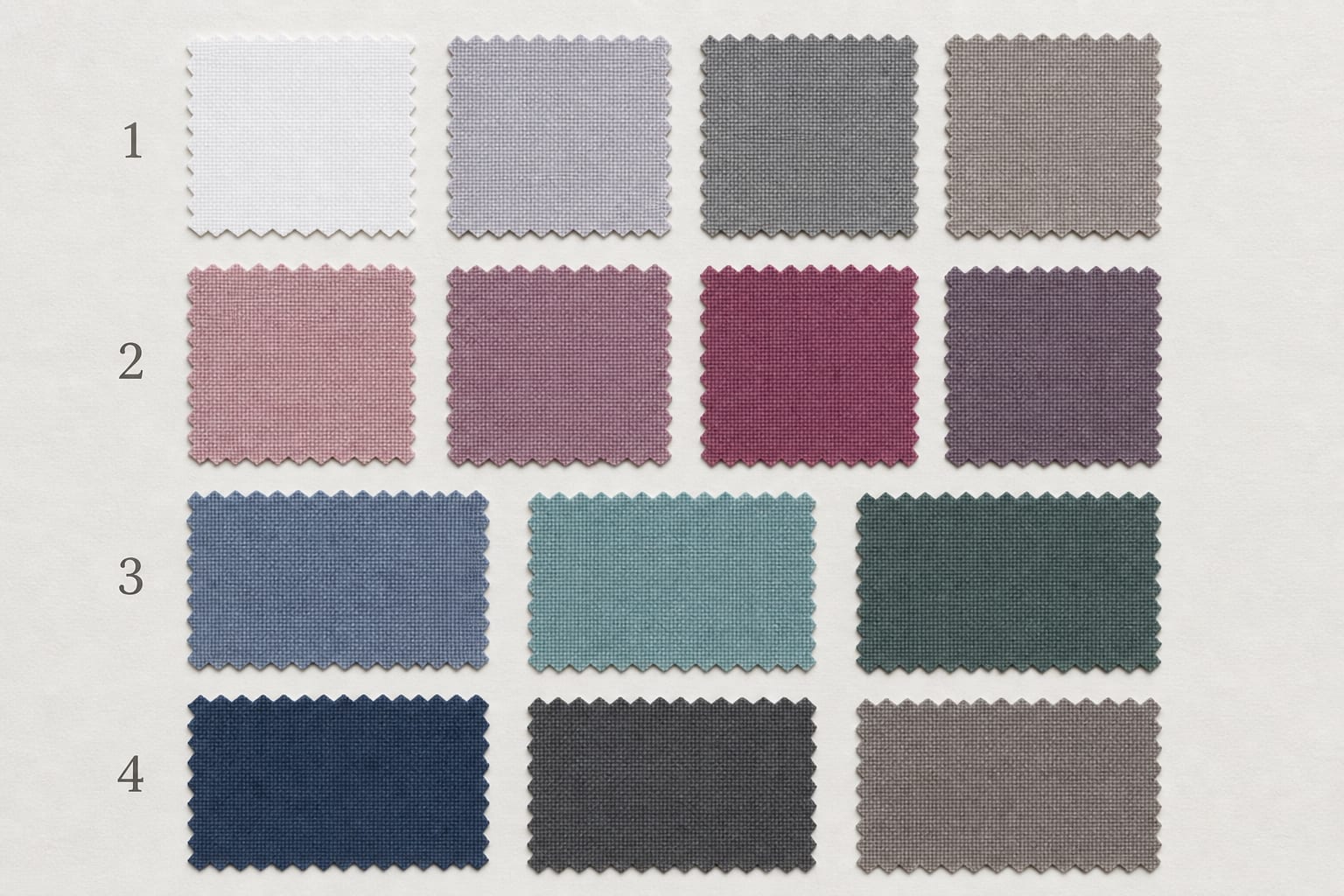
Compare this palette with the complete 12-season chart before shopping from a screenshot. Palette cards vary by analyst and printing method.
How to test the True (Cool) Summer palette
The best home test for True (Cool) Summer is a controlled fabric comparison. Use clean skin, indirect daylight, a plain background, and two colors that differ by one dimension at a time.
Start with temperature. Hold one likely True (Cool) Summer color near the face, then hold the closest opposite from a neighboring season. Watch the skin around the mouth, nose, under-eyes, and jawline. The better color usually makes those areas look calmer and more defined.
Test value second. If the palette is too light, the face can look unsupported. If it is too dark, the fabric may arrive before the person. The right value creates structure without forcing you to add heavy makeup.
Test chroma last. Clear colors can make a soft season look tired because the fabric is louder than the face. Muted colors can make a bright season look dusty. The right chroma makes the eye color, skin, and hair look connected.
Do not type yourself from a single good shirt. One shirt can work because of neckline, contrast, texture, or makeup. A season result should repeat across several fabric colors, lipstick families, metals, and neutrals.
Keep brief notes while you test. Write down which colors reduce shadows, which colors create redness, and which colors make the fabric more noticeable than your face.
If the test stays close after several rounds, book a professional draping session. Borderline results are normal, especially between adjacent seasons that share temperature, value, or chroma. Preparing for in-person color analysis covers what to bring and what to expect so the session confirms a genuinely close call.
What to wear as True (Cool) Summer
True (Cool) Summer outfits work best when tops, bottoms, neutrals, and accessories repeat the palette instead of fighting it. Start with colors near the face, then fix shoes, bags, and outerwear.
Choose cool white, dusty rose, mauve, raspberry, lavender gray, slate blue, soft teal, spruce, and soft plum.
Use pewter, soft navy, slate blue, cool taupe, spruce, or soft charcoal.
Neutrals
The best neutrals are cool white, pewter, cool taupe, slate blue, soft navy, and soft charcoal.
See how this compares with every other palette in best neutrals for each season.
Worst colors to avoid
Avoid orange, warm camel, golden yellow, tomato red, warm olive, chocolate brown, cream, and very bright coral.
Black is the color most often asked about across every season. Can every season wear black? covers where True (Cool) Summer lands and which exceptions apply.
Jewelry and metals
Brushed silver, pewter, white gold, and soft rose silver usually work better than yellow gold or bronze.
Leather, eyewear, and stones
Choose cool taupe, pewter, slate blue, soft navy, and soft charcoal leather for shoes, bags, and belts.
Soft navy, pewter, translucent gray, cool taupe, and muted tortoiseshell frames usually work better than solid black or orange-brown.
Amethyst, smoky quartz, cool rose quartz, amazonite, and complex-toned pearls are useful starting points when the setting stays brushed or satin.
True (Cool) Summer color rules: black, white, denim, and red
Can Cool Summer wear black?
Yes, but soft charcoal, soft navy, and soft plum usually look more natural near the face. Keep true black to smaller accents when it feels stark.
What white is best for Cool Summer?
Choose cool white, pearl gray, or lavender-tinted white instead of cream or optic white.
Can Cool Summer wear denim?
Yes. Medium cool denim, slate blue, and softened navy are better starting points than yellowed blue or very dark inky denim.
What red is best for Cool Summer?
Choose blue-based raspberry, rose red, or cool cranberry. Orange-red and tomato red usually add too much warmth.
True (Cool) Summer color combinations
True (Cool) Summer outfits are easiest to repeat when one color leads, one supports it, and one grounds the look. These combinations use colors already in the palette, so they are a practical starting point rather than rigid rules.
Easy near-face color
Wear Cool White or Raspberry near the face, then use Soft Plum for a shoe, bag, trouser, or outer layer.
Color with a neutral base
Use Pewter as the base, then add Dusty Rose and Soft Teal. It gives the outfit color without making every piece compete.
Three-color outfit
Pair Mauve, Soft Teal, and Soft Plum when you want more contrast. Keep one color dominant and use the others in smaller areas.
Prints and patterns for True (Cool) Summer
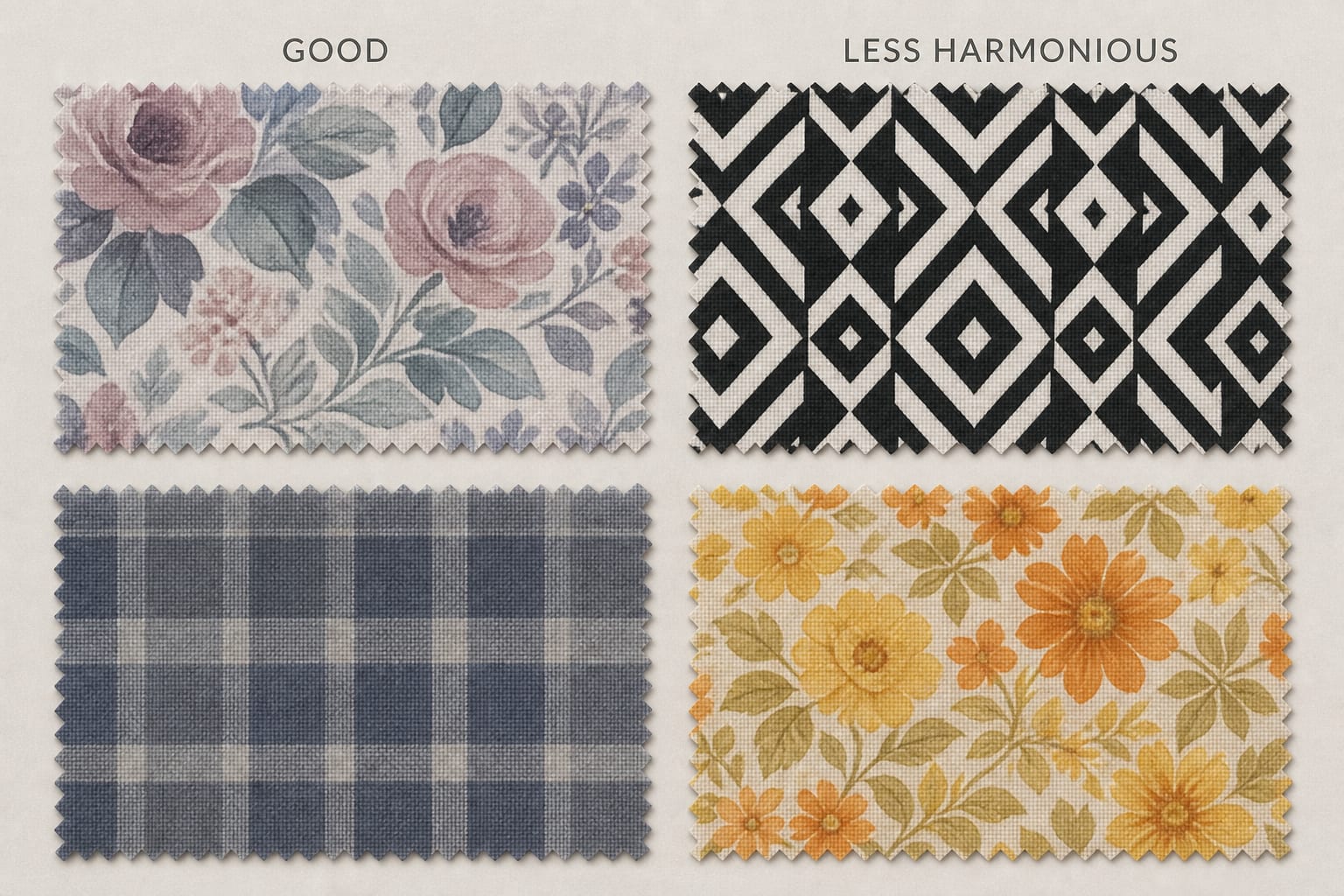
A True (Cool) Summer print works best when its colors repeat the same temperature, value, and chroma direction as the rest of the palette. Choose blended prints with softened edges. Watercolor florals, quiet checks, and low-definition textures are usually easier than crisp primary-color graphics.
Low to medium contrast usually holds together best. Keep the colors close in depth so the print does not arrive before the face.
Cool Summer prints work best with softened edges and low to medium contrast. Choose watercolour florals, loosely arranged botanicals, quiet checks, and gentle brush-stroke textures. Avoid crisp black-and-white geometrics, dense high-contrast stripes, and warm yellow backgrounds near the face.
Before buying a print, check the colors closest to your face. If the background, border, or dominant motif falls outside your best colors, treat it as a lower-body or accessory piece instead. The same printed hue can also read differently by season; how the same color changes across seasons shows why.
Borrowing from adjacent palettes
Cool Summer can borrow from Light Summer and Soft Summer when the borrowed colour keeps the face cool and the contrast controlled.
Light Summer
Borrow: Choose its medium powder blue, periwinkle, and cool pink when they do not look too pale near the face.
Leave behind: Leave very pale pastels and warm-neutral light shades when they make the face look unsupported or yellow.
Soft Summer
Borrow: Choose its blue gray, mushroom, and muted mauve when you want a quieter version of the Cool Summer palette.
Leave behind: Leave heavily grayed brown, olive, and warm-neutral shades when they make the skin look flat.
True (Cool) Summer makeup
True (Cool) Summer makeup should repeat the palette at a smaller scale. The most common mistake is wearing a technically pretty color that belongs to a neighboring season.
Foundation undertone
Foundation usually needs neutral-cool, cool beige, rose beige, or olive-cool direction. Avoid golden peach bases.
Lipstick
Use dusty rose, mauve, cool pink, raspberry, rosewood, and soft plum. Skip orange-red and terracotta.
Eyeshadow and liner
Eyeshadow works in taupe, pewter, slate, lavender gray, mauve, soft navy, and cool brown. Brown-black mascara is often easier than hard black.
Blush
Choose dusty rose, cool pink, mauve rose, or soft raspberry with no peach or bronze warmth.
True (Cool) Summer hair color
Hair color affects how easy the palette is to wear. The best hair direction supports your natural temperature, depth, and contrast instead of creating a second, competing palette around the face. For a longer walkthrough of testing dye and highlight direction against your result, see hair color analysis.
Best natural shades
The best natural direction is ash blonde, dark ash blonde, ash brown, cool medium brown, soft gray, or cool brown.
Best dye options
Good dye options include mushroom brown, ash brown gloss, cool beige blonde, soft silver, and cool brunette.
Hair colors to avoid
Avoid copper, caramel, golden blonde, auburn, warm chestnut, orange-red, and yellow highlights.
Start using your True (Cool) Summer palette
Start with a few repeatable choices instead of replacing a whole wardrobe. The goal is to notice whether the same color direction improves your face across several outfits.
- Save five core colors. Begin with Cool White, Dusty Rose, Mauve, Raspberry, and Pewter.
- Choose two reliable neutrals. The best neutrals are cool white, pewter, cool taupe, slate blue, soft navy, and soft charcoal.
- Build three outfits. Try one color near the face, one supporting color, and one neutral from the combinations above.
- Test before you replace. Compare a likely good color with a close alternative in indirect daylight. Use the home draping method and write down the repeated result.
True (Cool) Summer celebrity examples
These public figures are visual references commonly used in seasonal color analysis discussions. They are not proof of a private professional result, so use them as comparison anchors rather than a way to diagnose yourself.
- Emily Blunt
- Kate Middleton
- Allison Williams
Controlled draping is more reliable than matching your hair color or features to a public figure.
True (Cool) Summer vs adjacent seasons
Adjacent seasons share at least one color dimension. The fastest comparison is to test the one dimension that changes: temperature, value, or chroma.
True (Cool) Summer vs True Winter
True Winter is cooler with stronger contrast and clarity. Cool Summer needs blue-based color with softness.
Try this drape test: Compare dusty rose with black, then slate blue with cobalt. Cool Summer usually looks calmer in the softened pair, while True Winter needs the cleaner contrast.
True (Cool) Summer vs Light Summer
Light Summer is lighter and more pastel. Cool Summer needs more coolness, more slate, and slightly more grounded middle values.
Try this drape test: Compare powder pink with dusty rose. Light Summer usually benefits from the lighter colour, while Cool Summer needs the more grounded middle value.
True (Cool) Summer vs Soft Summer
Soft Summer is softer and more neutral. Cool Summer is cleaner, cooler, and usually handles raspberry and slate better.
Try this drape test: Compare blue-gray with slate blue, then mauve with raspberry. Soft Summer usually settles into the grayer option, while Cool Summer needs more clear coolness.
Get a professional color analysis
A self-test can narrow your season, but a trained analyst can compare controlled drapes and explain the exact reason one palette works better than another. That matters most when you are stuck between adjacent seasons.
Start with the free color analysis quiz, then find a True (Cool) Summer analyst in the color analyst directory. City guides are live for major markets including Vancouver, New York, and Los Angeles.
Prefer to explore on your own first? Try AI color analysis to test-drive the palette, then save your True (Cool) Summer palette to shop and compare against a trained analyst's drapes later.
Still deciding if it is worth the cost? Read is color analysis worth it and online vs. in-person color analysis first, then use how to choose the right color analyst to vet a booking.