
What hair color analysis actually means
Hair color analysis is a structured way to decide which hair colors suit your face. It looks at the relationship between skin, eyes, brows, natural hair, and the shade you want to wear.
The goal is not to find the only color you are allowed to have. The goal is to avoid the common mistake: choosing a beautiful trend shade that fights your undertone, erases your contrast, or makes the hair enter the room before your face does.
Beauty publishers are already treating the topic as part of seasonal color analysis. IPSY's 2026 guide frames hair color around season, undertone, chroma, and contrast, while Glamour's salon story shows how a professional color analysis can change the direction of a dye appointment.
That makes the search term useful, but also easy to overpromise. A color analysis can tell you whether ash brown, golden brunette, copper, beige blonde, or blue-black belongs near your face. It cannot replace a stylist checking the actual hair, previous dye, damage, and lift needed to get there.
Hair color analysis vs salon color vs AI tools
| Factor | Color analysis | Salon color consultation | AI, quiz, or app |
|---|---|---|---|
| Best use | Clothes, makeup, metals, and hair direction | Exact dye formula and hair health | Fast shade preview or rough starting point |
| Main evidence | Undertone, value, chroma, contrast, drapes | Hair level, condition, pigment, goal, maintenance | Photo, quiz answers, or prompt inputs |
| Hair output | Shade families to ask for or avoid | Formula, lift, toner, placement, upkeep | Suggested colors or simulated previews |
| Biggest risk | Treating the season as a rigid rule | Ignoring palette harmony near the face | Bad lighting, filters, and false confidence |
| Best next step | Bring result to a stylist | Use palette notes before dyeing | Confirm before a major color change |
The six signals a good result should cover
A useful hair color analysis explains why a shade works. If the result only says "try caramel" or "avoid blonde," it is too thin.
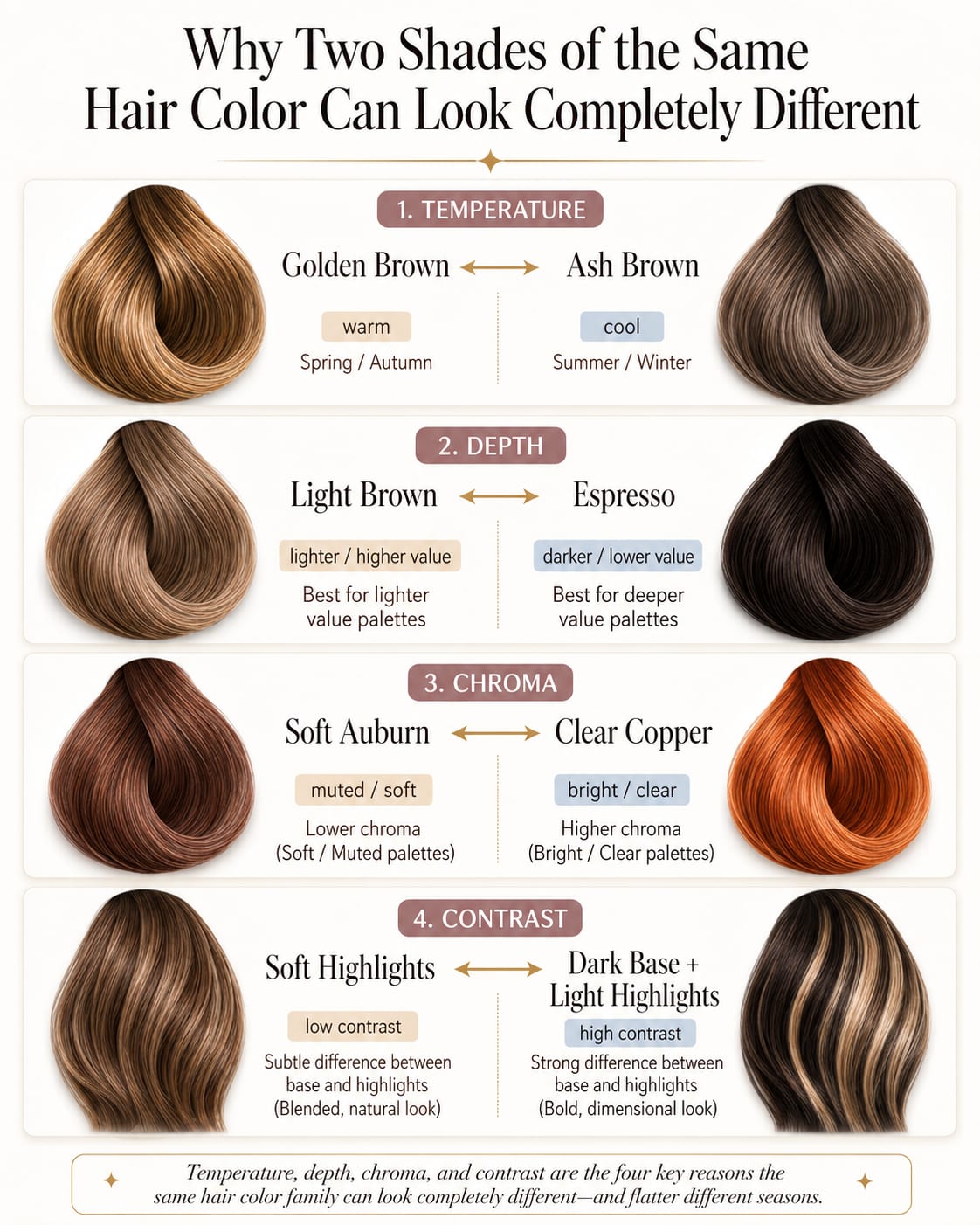
Undertone
Warm, cool, or neutral undertone decides whether golden, copper, ash, beige, blue-black, or violet-brown directions look connected to the face.
Depth
Depth is how light or dark the hair itself is, on a level scale independent of the face. A good result gives a range, not one shade name.
Contrast
Contrast is the visual distance between hair, skin, brows, and eyes. It sets the flattering depth range for you, and changing hair color can raise or flatten that contrast quickly.
Chroma
Chroma decides whether the hair should look clear and glossy or soft and muted. Combined with undertone, it also pushes a shade toward earthy (warm and muted) or smoky (cool and muted).
Natural level
Natural hair level matters because salon color has to work with existing pigment. A flattering idea still has to be technically possible.
Color history
Bleach, box dye, gloss, toner, gray coverage, and previous highlights change what a stylist can safely do in one appointment.
Best hair color direction by color season
Seasonal color analysis gives a strong first filter for hair color. Use this as direction, then let a stylist translate it into formula, placement, and maintenance.
| Season | Hair color logic | Usually works | Usually fights the palette |
|---|---|---|---|
| Spring | Warm, clear, light to medium | honey blonde, golden brunette, warm caramel, strawberry blonde, clear copper | ashy brown, matte beige, blue-black, heavy charcoal |
| Summer | Cool, soft, light to medium | ash blonde, mushroom brown, cool beige blonde, soft brunette, gentle silver | orange copper, golden blonde, jet black, high-contrast streaks |
| Autumn | Warm, earthy, muted to deep | chestnut, auburn brown, warm espresso, caramel brown, copper, cinnamon | platinum, icy ash, blue-black, flat cool brown |
| Winter | Cool, clear, medium to deep | cool espresso, black-brown, soft black, blue-black, dark ash brown, cool gray | golden highlights, orange copper, muddy brown, beige blonde |
For the full palette logic behind these rows, start with the seasonal color analysis chart, then compare your likely season against its neighbors.
Hair color ideas by 12-season subtype
The 12-season system makes hair color more specific. These are shade families, not salon formulas.
Light Spring: honey blonde, light golden brown, strawberry blonde
Warm Spring: golden blonde, copper, warm caramel, clear auburn
Bright Spring: golden bronde, clear copper brown, glossy warm brunette
Light Summer: ash blonde, cool beige blonde, light ash brown
Cool Summer: mushroom brown, ash brown, soft silver, cool medium brown
Soft Summer: taupe brown, muted ash brown, cool beige brunette
Soft Autumn: toffee brown, soft copper brown, warm muted brunette
Warm Autumn: cinnamon, copper, chestnut, golden brunette
Deep Autumn: warm espresso, dark chestnut, mahogany brown
Deep Winter: cool espresso, black-brown, soft black
Cool Winter: dark ash brown, blue-black, cool gray
Bright Winter: glossy cool brunette, blue-black, high-shine espresso
Can AI, ChatGPT, or a quiz do hair color analysis?
AI and quiz tools can give a starting point for hair color analysis. They are best for learning the language of undertone, depth, and contrast before you book a real appointment.
The weak point is evidence. A photo can shift warm or cool because of lighting, camera processing, filters, makeup, or dyed hair. The Good Trade's seasonal color guide notes that professional analysts look at complexion effects in natural lighting, with no makeup and no dyed hair. That is exactly where a casual selfie test struggles.
Search demand around AI makes sense because people want a fast answer. The safer use is narrow: ask for shade families to discuss with a stylist, not a permanent dye decision. If an AI prompt tells you to go platinum, copper, or blue-black from one photo, treat that as a question to verify.
The TikTok resurgence also explains why these searches keep growing. Allure covered the color analysis trend and its connection to filters, South Korean personal color studios, and renewed interest in seasonal systems. Hair is the next practical decision after clothes and makeup.
What to ask your hairstylist
A good salon conversation turns color analysis into hair reality. Bring the palette direction, then ask technical questions.
- What depth range keeps my natural contrast intact?
- Should this shade lean warm, cool, or neutral-cool?
- Will this lift expose orange, gold, red, or yellow pigment?
- Can we create this with gloss, lowlights, highlights, or all-over color?
- How often will this need toner, root work, or gloss refreshes?
- Which inspiration photos match my undertone and contrast, not just my taste?
If you have not booked a color analysis yet, compare online vs in-person color analysis before choosing a format. If budget matters, read the color analysis cost guide first.
Should you book a color analyst or a colorist?
Book a color analyst when you do not know your palette direction. This is the right first step if every hair trend looks tempting, your makeup colors feel wrong, or your wardrobe and hair color never seem to agree.
Book a hairstylist or salon colorist when you already know the direction and need execution. A stylist decides whether the hair can safely lift, how much warmth needs controlling, and how to maintain the result.
Book both when the stakes are high. Gray transition, major blonding, black dye removal, copper, platinum, and wedding-season changes deserve more than a quiz result.
Red flags to avoid
- The result is based only on natural hair color, eye color, or ethnicity.
- The tool or analyst gives one exact shade without explaining undertone, depth, and contrast.
- The recommendation ignores whether the current hair is dyed, bleached, gray, or chemically treated.
- The advice treats every person in a season as if they need the same hair color.
- The page promises a salon formula without seeing the actual hair condition.